Sep 14, 2026
Cardboard Cat Sofa Sourcing: Compare Packaging, Assembly and Shipping Costs
Compare cardboard cat sofa packaging, assembly and shipping costs. Review carton volume, gross weight and flat-pack sourcing questions before ordering.
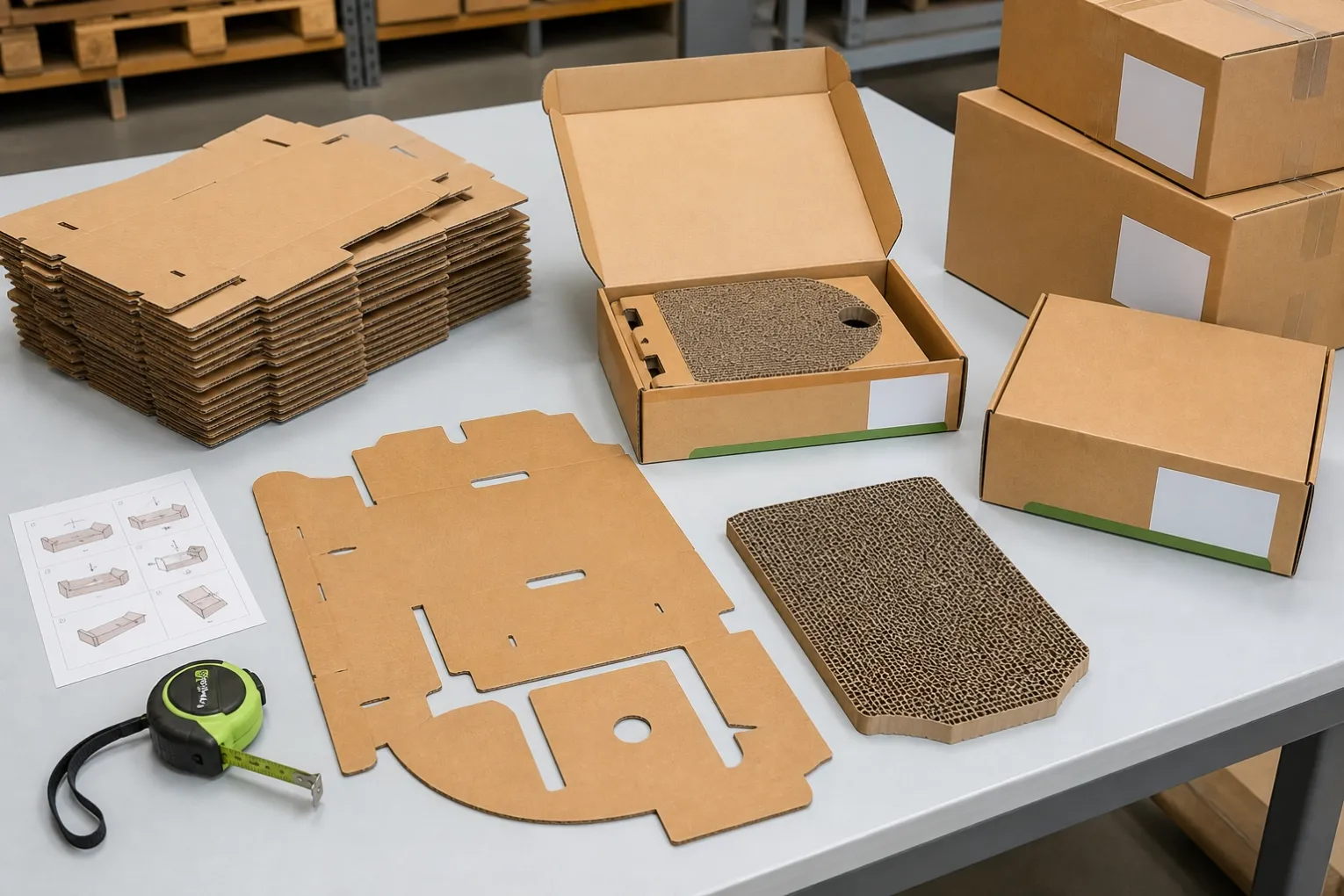
A low unit price is only one part of a cardboard cat sofa sourcing decision. Packaging volume, the number of handling steps, assembly requirements and damage can change the cost of getting a sellable product to the customer.
For importers and private-label pet brands, compare the packed product and delivery plan alongside the product itself. This guide uses the confirmed specifications of the LeKee Care flat-packed cardboard cat sofa as a planning example—not a freight quotation or a guarantee of shipment capacity.
1. Start with the Packed Dimensions
Finished product dimensions describe the assembled item. They are not the dimensions to use when estimating carton volume.
Item | Current product reference |
|---|---|
Finished size | Approx. 52 × 23 × 29.5 cm |
Packed size | Approx. 53 × 14 × 30 cm |
Packing method | Flat-packed, one set per carton |
Gross weight | Approx. 1.2 kg per packed set |
MOQ | 500 pieces |
Sample lead time | 14 days; schedule to be agreed |
Production lead time | 25 days; starting point and order schedule to be agreed |
The reference carton volume is 0.53 × 0.14 × 0.30 = 0.02226 cubic meters per set. At 500 sets, the sum of the individual carton volumes is 11.13 cubic meters.
This is a carton-volume calculation. It does not include pallets, gaps, extra protection or a freight provider’s charging rules. Confirm the final packed dimensions and actual gross weight before booking transport.
At the listed reference weight, 500 packed sets would total approximately 600 kg before any additional shipping materials. Do not treat the listed gross weight as product net weight or add the same packaging weight twice.
2. Compare Flat-Packed and Assembled Offers Fairly
Flat packing is useful only if it works with the buyer’s receiving and sales process. Compare an assembled offer and a flat-packed offer using their actual packed measurements, not an assumption about how much space either saves.
Ask each supplier to provide:
The number of complete sets in each carton.
Actual carton dimensions and gross weight.
A packing photo and a complete parts list.
Assembly instructions and the tools, if any, needed.
The cost of any requested inserts, labels or extra protection.
Also decide who assembles the product: the end customer, the retailer or your own warehouse. If your warehouse assembles it, include that labor and the onward packaging in your comparison.
Do not promise a specific freight saving without two comparable packing plans and freight quotations for the same route and service.
3. Test Assembly before Approving the Order
A compact carton is not a complete solution if the customer cannot assemble the product clearly or if parts arrive incomplete.
Review a packed sample as a first-time recipient would. Check whether the contents match the parts list, whether panels fit as intended, and whether the instructions identify each step clearly.
Record the time needed for your sample assembly as an observation, not a universal promise. Different users and final configurations may take different amounts of time.
Use the sample review to agree on printing, edge condition, panel fit and acceptable appearance. If instructions or artwork change, approve the revised version before production and packing.
4. Include Protection and Handling in the Cost Comparison
Ask how the packed product is protected at the corners, panel surfaces and contact points. Review whether components can move inside the carton and what prevents damage during the intended distribution route.
Confirm the proposed stacking arrangement and any validation needed with the supplier and logistics provider. A geometric loading calculation does not establish carton stacking strength or transport durability.
If damage testing is required for your route or sales channel, agree on the test method, sample configuration, acceptance criteria and cost. Do not describe an untested package as drop-tested or transit-certified.
Plan how receiving damage will be documented and how affected units will be handled. Any spare parts or extra protective materials should be quoted rather than assumed to be included.
5. Treat Container Loading Figures as Planning References
The product page gives these illustrative floor-loaded quantities:
Container | Illustrative quantity |
|---|---|
20GP | 1,232 sets |
40GP | 2,464 sets |
40HQ | 2,816 sets |
These figures use 530 × 140 × 300 mm cartons, one set per carton, no pallets, a 300 mm vertical orientation and seven, seven and eight layers respectively. They are not tested maximum capacities or guaranteed shipment quantities.
Actual loading must consider the allocated container, usable dimensions, door access, stacking strength, handling and the approved packing plan. A palletized order needs its own calculation.
For a first order of 500 pieces, request an appropriate shipping quotation rather than assuming a full container is necessary. Compare the proposed service, handling, delivery point and included charges with the same care as the product price.
6. Build a Cost per Sellable Set
For internal planning, use:
Total relevant order costs ÷ number of sellable sets received.
Relevant costs may include the goods, excluded packaging, inspection, transport, destination services and any assembly or handling work. Avoid adding a charge twice if it is already included in the supplier or freight quotation.
For illustration only, if a hypothetical order has total relevant costs of $3,000, receiving 500 sellable sets gives a cost of $6.00 per set. If only 480 sets are sellable, the same total becomes $6.25 per sellable set, before any additional corrective costs.
This is a budgeting example, not LeKee Care pricing or an expected damage rate. Its purpose is to show why a small unit-price saving should be considered alongside packing and receiving outcomes.
7. Adapt the Packing Brief to the Destination
U.S. retail or e-commerce programs
Identify whether cartons are going to your own warehouse, a retailer or another fulfillment provider. Provide the receiving party’s required labels and packing instructions. Confirm whether the individual carton is also intended for onward delivery or needs another outer package.
UAE importers and distributors
Specify the delivery endpoint and whether the order is for local distribution or onward shipment. For mixed-SKU orders, agree on carton identification and a packing list that supports sorting at the destination. Ask the logistics provider about handling and storage conditions on the actual route rather than assuming every Middle Eastern shipment uses the same packing plan.
Lithuania and European private-label programs
For a Lithuanian buyer testing a first order, confirm whether cartons will be received loose or on pallets and how the products will move to stores or customers. Identify the final sales markets and required instruction and artwork versions before printing. Do not assume one language version covers every European destination.
These are procurement planning points. Product and packaging obligations should be reviewed separately for the applicable markets; this article does not establish legal compliance.
Buyer Checklist before Paying the Deposit
Confirm product and packed dimensions separately.
Confirm one complete set per carton and the actual packing arrangement.
Identify gross weight, not just net product weight.
Approve the parts list, assembly instructions and artwork.
Agree on protection and any required packing tests.
State whether loading is loose or palletized.
Compare freight quotes to the same delivery endpoint.
Confirm sampling and production schedule starting points.
Record inspection, correction and receiving arrangements.
Frequently Asked Questions
Does a 25-day production lead time include international shipping?
No shipping duration is established by that production reference. Confirm production milestones, approvals, inspection, dispatch and transport separately in the order schedule.
Is 11.13 cubic meters the final freight volume for 500 sets?
It is the sum of 500 cartons at the listed dimensions. Final freight volume depends on actual packing, pallets or other materials and the provider’s measurement and charging method.
Are the container quantities guaranteed?
No. They are illustrative layout references. Confirm the actual loading plan and stacking suitability before committing to a shipment quantity.
Can we customize artwork and packaging?
Yes, artwork and packaging requirements can be discussed. Confirm the scope, cost, MOQ conditions and approved sample for your order rather than assuming all changes are included.
Request a Packing-Based Quotation
Send your quantity, artwork, destination, receiving method and packaging requirements when requesting the cardboard cat sofa.
For a broader comparison, read how to compare Chinese supplier quotes. Before booking a visit, review our third-party inspection brief and business FAQ.
The best packing decision is the one supported by actual dimensions, a usable assembly process and a clearly priced delivery plan—not the smallest number in a product quotation.