Oct 8, 2026Buying Guides
Planning Your Next Product Collection: A China Sourcing Timeline Before Chinese New Year
Planning your next baby or pet product collection? Learn how to align sample approvals, Chinese New Year launch plans, spring promotion and inventory readiness.
For buyers sourcing baby and pet products from China, planning the next collection should begin with more than a sample request. The starting point is a clear commercial calendar: when the product will be announced, when promotion begins, and when inventory must be available for sale.
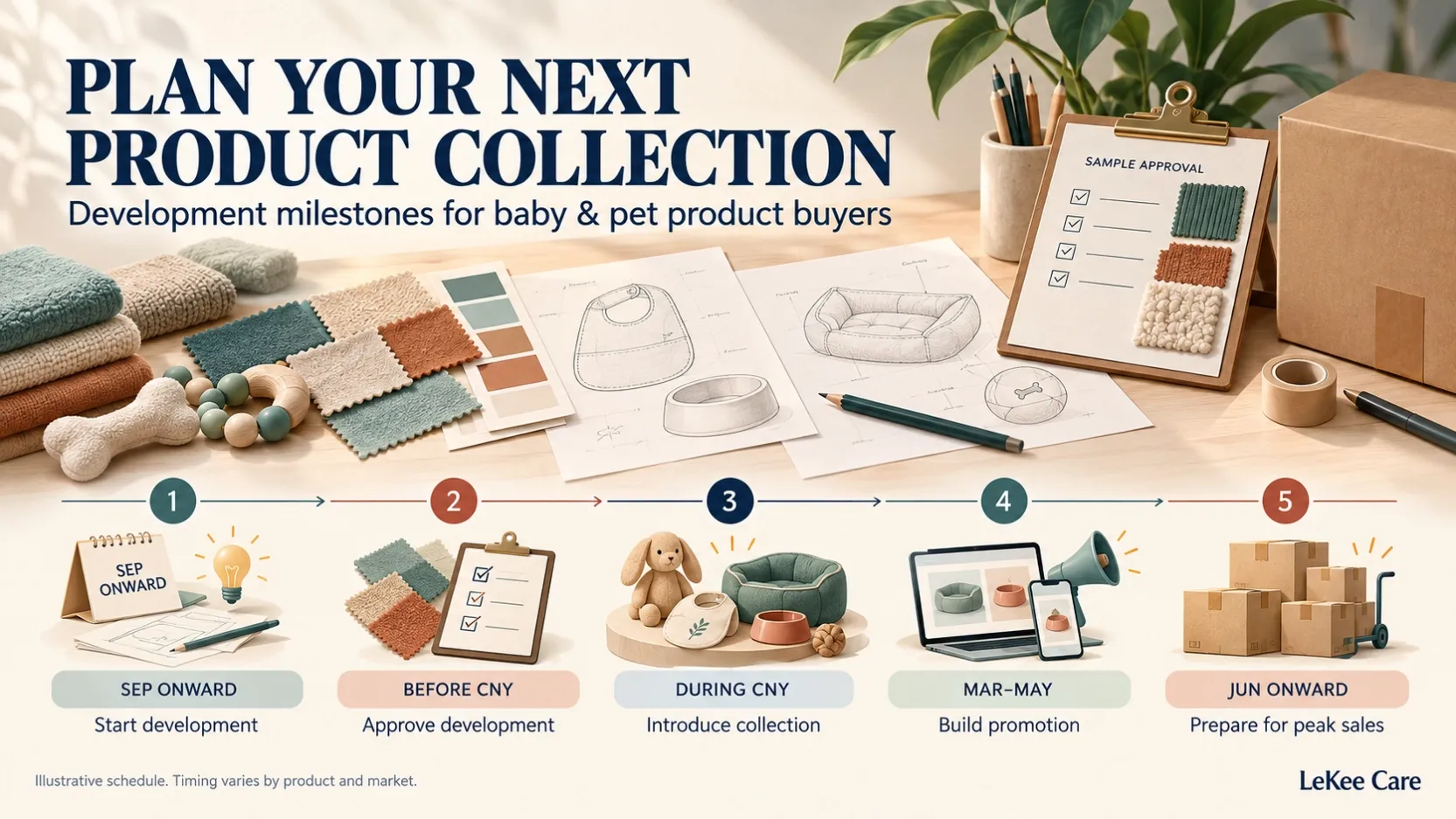
In our work with buyers in these categories, a recurring new-product development window runs from September through the following June. Within that window, many customers aim to complete development before Chinese New Year, introduce the collection during the holiday period, build promotional momentum from March to May, and prepare for a stronger selling season from June onward.
This is a planning pattern—not a universal sales calendar. Your destination market, product category, sales channel and launch strategy should determine the final schedule.
The key is to separate development completion, product announcement and stock availability. They are three different milestones.
1. Build Your Calendar Around Three Separate Dates
“Launch before the season” is not a detailed enough instruction for a supplier.
Before requesting samples, establish:
- Development approval date: When must the product specification, sample and packaging be approved?
- Announcement date: When will the product appear in your catalog, campaign or retailer presentation?
- Inventory-ready date: When must goods be received and ready for sale at the agreed destination?
A product can be announced before inventory arrives, but the customer-facing availability date must reflect the actual delivery plan.
For example, if you intend to introduce a collection during Chinese New Year, decide whether this means a trade preview, a preorder campaign or an immediately available product. Each requires a different level of readiness.
Planning stage | Buyer’s main objective | What to confirm |
|---|---|---|
September onward | Define the next collection | Target customer, product range, budget, quantities and development scope |
Before Chinese New Year | Reach the agreed development milestone | Sample revision, specifications, packaging and unresolved issues |
During Chinese New Year | Introduce the collection, where appropriate | Approved images, accurate specifications and realistic availability messaging |
March–May | Build promotional momentum and prepare supply | Campaign requirements, order status, inspection and delivery arrangements |
June onward | Support the planned selling season | Available inventory, replenishment timing and customer feedback |
Development may continue through June for later launches or additional models. Do not force every product into the same deadline if its development requirements differ.
2. Define What “Development Complete” Means
An attractive sample does not necessarily mean a product is ready for production.
Before setting a pre-holiday deadline, agree on the deliverables that will count as completion:
- The approved product version and revision number.
- Materials, dimensions, colors and included accessories.
- Functional and structural requirements.
- Branding, labels, instructions and packaging artwork.
- Target-market testing and documentation requirements, with responsibilities assigned.
- Remaining issues, their owners and the conditions for closing them.
If packaging, testing or a structural revision remains open, record that clearly. A project may be ready for photography but not ready for a production order.
Use a written approval record rather than relying on messages such as “the sample looks good.”
3. Choose the Development Route Before Setting the Deadline
Not every new collection needs a completely new product structure.
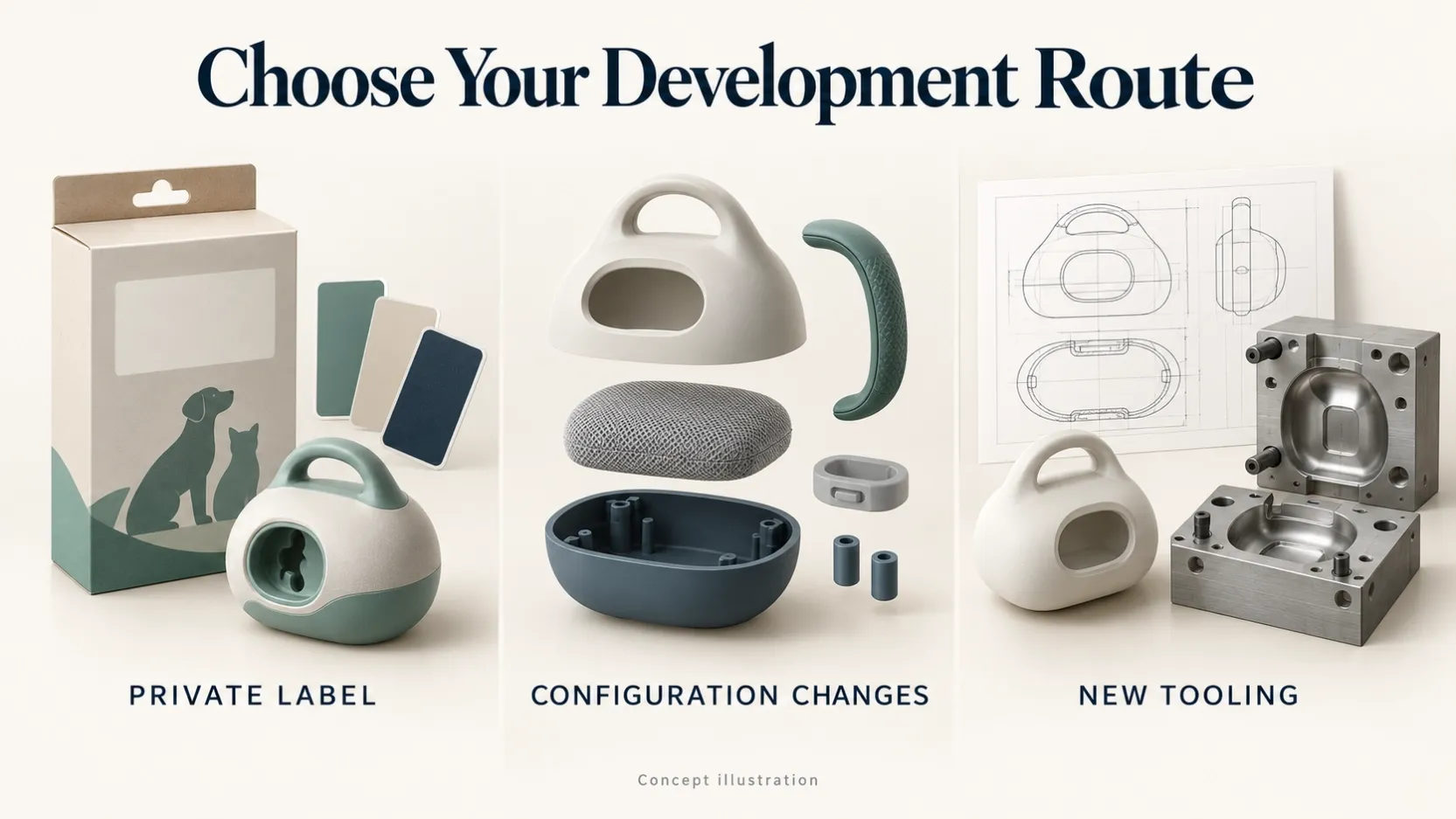
Existing model with new branding or colors
The work may focus on color confirmation, logo placement, artwork and packaging. Buyers should still confirm color-specific quantities and whether changes affect sample requirements or production timing.
Existing model with configuration changes
Changing accessories, fabric, components or functions can affect the quotation, assembly, packaging and verification requirements.
Do not assume a configuration change is only a price adjustment. Ask what needs to be checked again.
Structural changes or new tooling
A new shape, fitting arrangement or structural design requires a separate discussion of feasibility, tooling, revisions and approval stages.
Before committing to a launch date, ask the supplier to identify the unresolved development steps.
When timing is tight, consider whether an existing platform can meet the commercial objective. A narrower, well-defined first release may be more practical than launching every planned variation at once.
4. Set a Cost Boundary Before Sampling
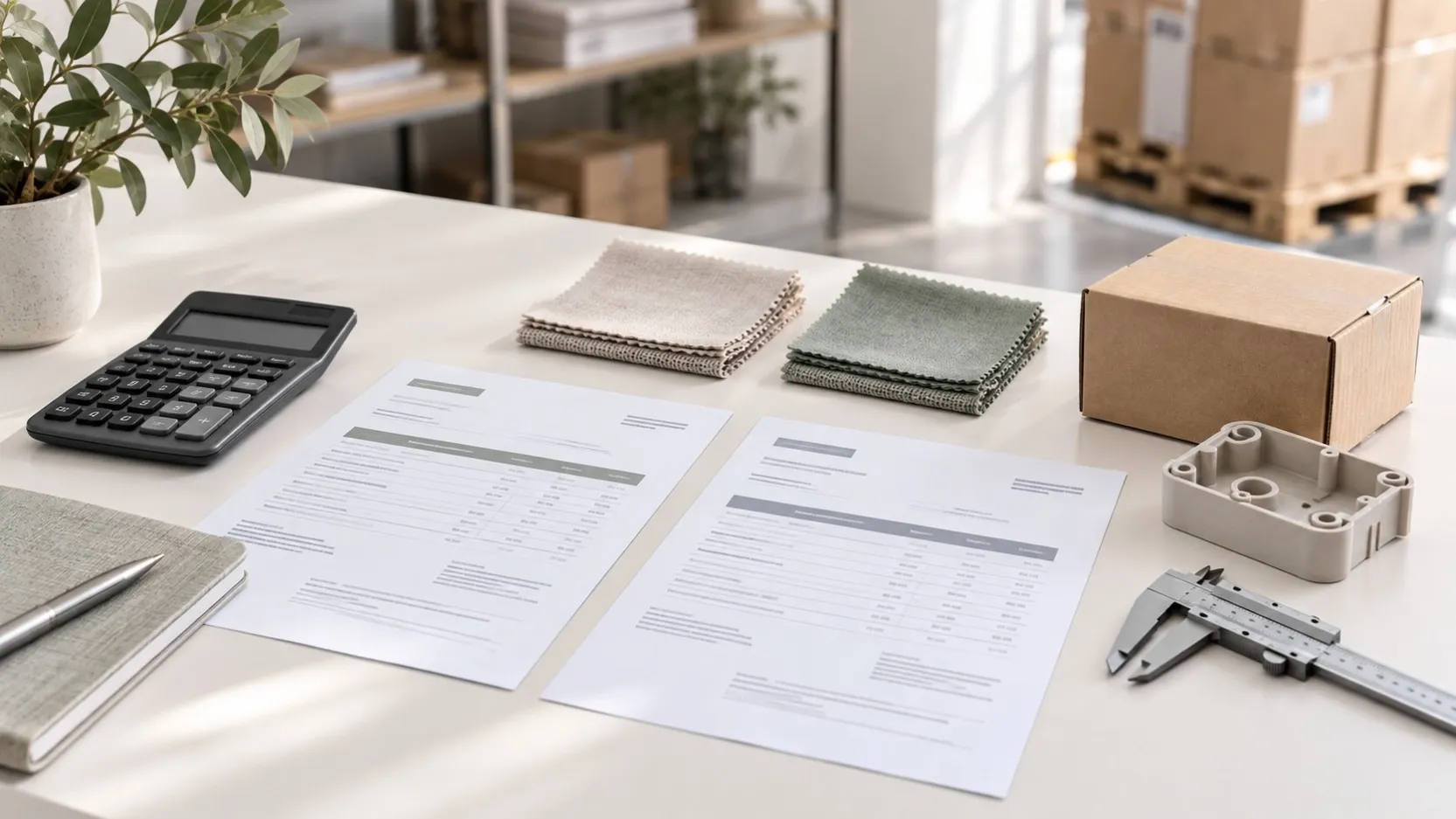
A target unit price is useful, but it is not the complete development budget.
Clarify whether your target refers to the product alone or a broader delivery scope. Keep separate allowances for:
- Samples and sample freight.
- Custom development and tooling.
- Branding and packaging.
- Testing and inspection.
- Shipping and other destination-related costs.
Also identify which features are essential and which are optional. Without that distinction, sample revisions can increase cost without improving the product’s value to your intended customer.
For a more detailed comparison framework, see How U.S. Buyers Can Compare Chinese Supplier Quotes—and Avoid Missing Costs.
5. Work Backward From Inventory Availability
Production lead time is only one part of the calendar.
Your plan should allow for:
- Requirements clarification and feasibility review.
- Sample preparation.
- Sample delivery and buyer evaluation.
- Revisions and any additional verification.
- Written approval and order confirmation.
- Materials preparation and production.
- Inspection and corrective action, if needed.
- Transport, clearance and receiving arrangements.
Ask which activities can run in parallel and which depend on an earlier approval. Do not simply add a quoted production period to the day you first contact a supplier.
For projects spanning Chinese New Year, confirm the supplier’s actual working schedule, order deadlines and post-holiday arrangements for that year. Use agreed dates rather than assuming a standard shutdown period.
If a key approval is late, discuss the trade-off explicitly: reduce the scope, split the launch or revise the availability date.
6. Prepare Launch Materials From the Approved Version
For buyers planning a holiday-period announcement followed by promotion from March to May, content preparation should be part of development—not an afterthought.
Confirm when you will have:
- A representative sample for photography.
- Final product dimensions and configuration details.
- Images showing the product and included accessories accurately.
- Packaging and assembly information, where relevant.
- Product claims supported by the appropriate evidence.
- Clear stock, preorder or delivery messaging.
If a sample changes after photography, review the images and descriptions before using them in a campaign.
This matters particularly when a product is offered in multiple configurations. Promotional images should not imply that optional accessories are included in every order.
7. Use a Short Development Brief to Start the Discussion
A supplier can respond more usefully when the first inquiry explains the commercial objective as well as the product idea.
Information to provide | What to specify |
|---|---|
Target market and channel | Destination country, retail, distribution or online sales |
Product direction | Existing model, reference product or new concept |
Development scope | Branding, color, configuration, packaging or structural changes |
Planned quantities | Initial quantity by model and color; separate forecasts from committed orders |
Cost target | Currency and what the target price should include |
Key dates | Development approval, announcement and inventory-ready dates |
Sample requirements | What the sample must demonstrate and who will approve it |
Packaging needs | Retail presentation, assembly format, carton requirements and sales-channel needs |
Verification requirements | Required checks, documents and responsibility for arranging them |
Decision process | Main contact, final approver and expected review turnaround |
If some information is not yet available, mark it as open. A visible uncertainty is easier to manage than an assumption hidden inside a quotation.
8. Avoid Three Common Seasonal Planning Mistakes
Mistake 1: Treating sample delivery as development completion
Receiving a sample starts the evaluation stage. Allow time to review it, communicate changes and approve the final version.
Mistake 2: Adding models without revisiting the schedule
More colors, configurations or product categories can create additional approvals and packing decisions. Confirm how an expanded range affects the original plan before committing to it.
Mistake 3: Announcing availability before delivery scope is agreed
“Production complete” does not mean “ready for sale in your warehouse.” Confirm the delivery destination, responsibilities and planned receiving date before making availability commitments.
Frequently Asked Questions
When should we start discussing the next collection?
For buyers following the September-to-June development pattern described here, September can be a useful starting point. The right lead time depends on the scope, number of sample rounds and required inventory date. Structural development needs a different plan from a branding update.
Must all development be finished before Chinese New Year?
No. It is a milestone some buyers choose to support holiday-period introductions and spring promotion. Later launches can follow a different schedule. What matters is agreeing on achievable milestones rather than assuming every project must fit one calendar.
Can we announce a product before bulk production is complete?
You can plan a preview or preorder introduction, but distinguish it clearly from immediate availability. Use accurate product information and a delivery plan that supports the promises made to customers.
What should we do if the sample is not approved by the planned deadline?
Review the remaining issues and their impact. Agree whether to simplify the first release, postpone a variation or move the launch date. Do not treat an unresolved sample as approved solely to keep the calendar unchanged.
Plan Your Next Collection With LeKee Care
If you are preparing a new baby or pet product collection, share your product direction, destination market, estimated quantities and the three key dates: development approval, announcement and inventory availability.
Start with our product range, or send your development brief so we can discuss the scope and outstanding questions.
Sample charges, tooling, inspection and commercial arrangements are discussed case by case and confirmed in writing. See our business FAQ for the initial discussion points.